
Emergency Contact Numbers
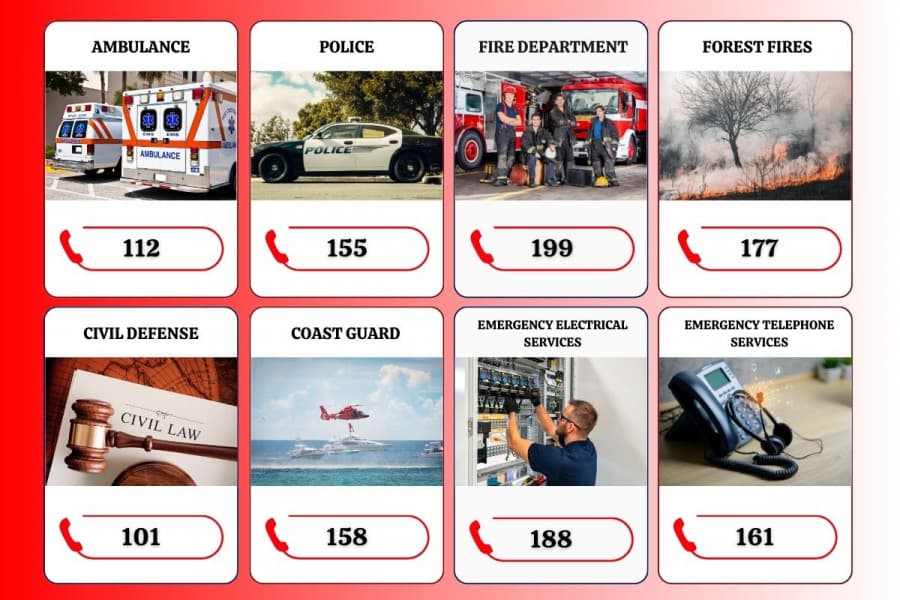
Cyprus operates under the European Union standard emergency response system. For any immediate threat to life, property, or public order, individuals should use the harmonized emergency numbers available across the Republic of Cyprus.
- 112: The primary European emergency number, accessible free of charge from all mobile and landline phones. Operators typically speak Greek and English.
- 199: A local emergency number that functions similarly to 112, routing calls to the police, fire service, or medical dispatch.
- 1460: The Citizen’s Line for the Cyprus Police, used for non-emergency reports, general inquiries, or providing information regarding ongoing investigations.
When calling emergency services, callers are expected to provide their location, the nature of the emergency, and a contact number. In the case of road accidents, it is mandatory to wait for police instructions before moving vehicles, unless they pose an immediate danger to other road users.
Police and Public Safety
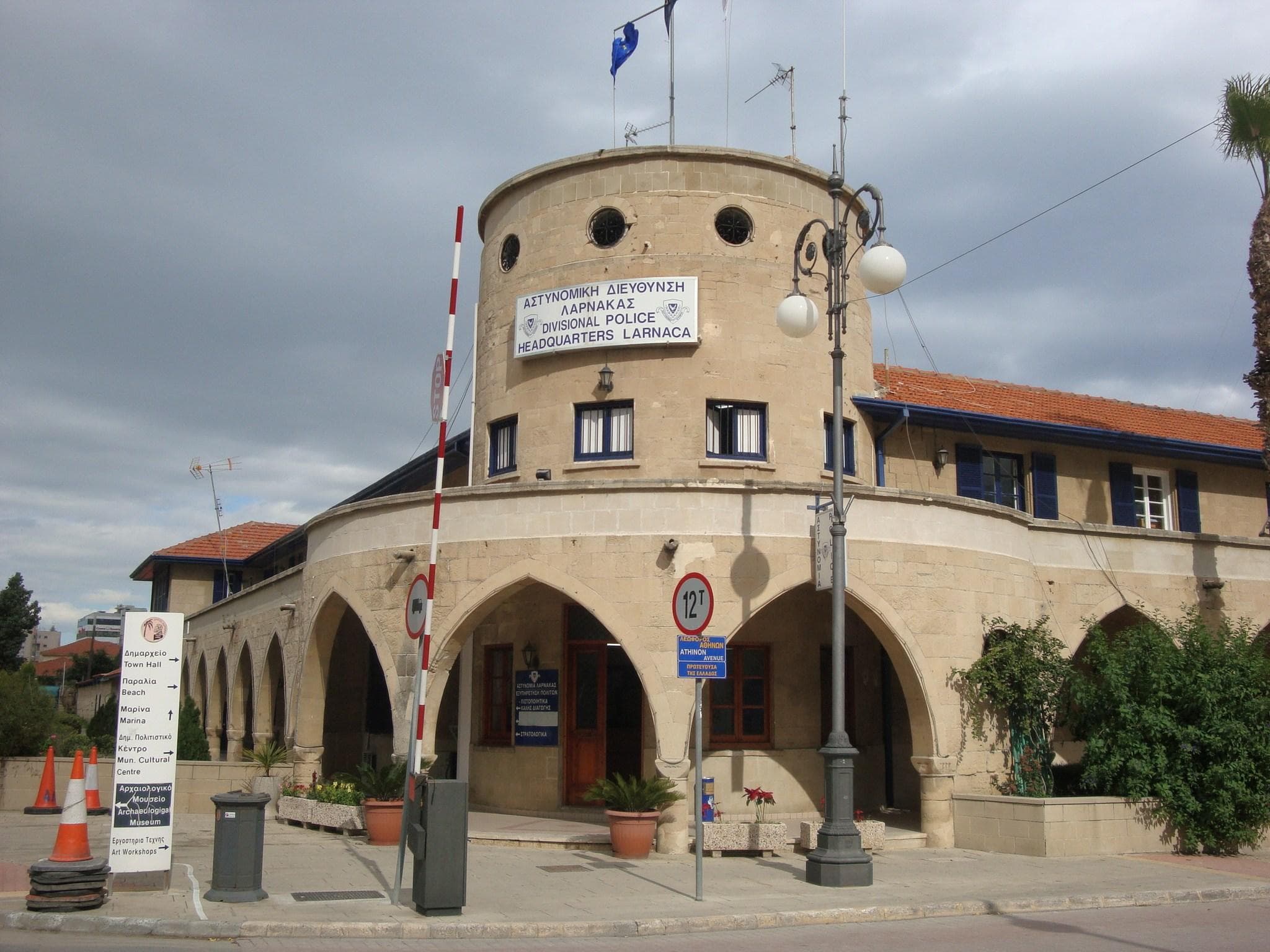
The Cyprus Police (Astynomia Kyprou) is the national law enforcement agency responsible for maintaining public order, traffic safety, and crime prevention. Cyprus is consistently ranked among the safest countries in the European Union regarding violent crime rates; however, petty theft and residential burglaries do occur in urban centers and tourist areas.
For non-urgent matters, residents should visit their local district police station. The primary departments relevant to foreign nationals include:
- Traffic Department: Manages road safety and accident reports.
- Aliens and Immigration Service: Handles residency permits and registration, though many administrative functions are now decentralized through the Civil Registry and Migration Department.
- Crime Prevention Unit: Provides guidance on securing private property and businesses.
Official information regarding police procedures and active alerts can be found on the Cyprus Police Official Website.
Medical Emergencies and Ambulance Services
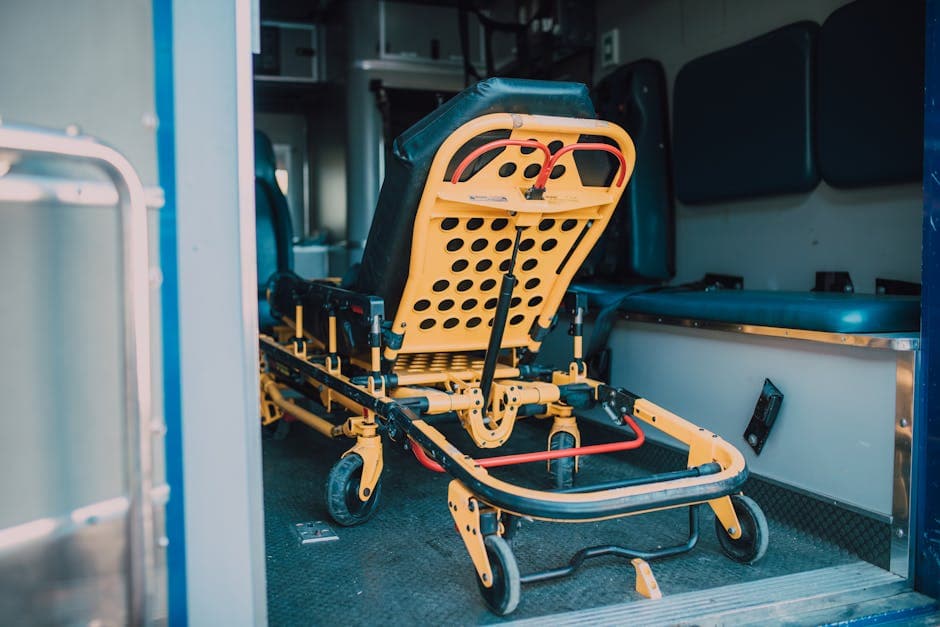
Ambulance services in Cyprus are centralized and dispatched through the 112/199 system. Emergency medical care is provided at the Accident and Emergency (A&E) departments of public hospitals located in major cities (Nicosia, Limassol, Larnaca, Paphos, and Paralimni).
Under the General Healthcare System (GESY), registered beneficiaries pay a standardized co-payment for emergency visits. For those not registered or without valid European Health Insurance Cards (EHIC), the following estimated costs apply as of early 2025:
- A&E Visit (Standard): Approximately 10 EUR ($10.85 USD, Jan 2026) for GESY beneficiaries.
- Non-Beneficiary A&E Fee: Rates vary by treatment, but a base consultation often starts at 30 EUR ($32.55 USD, Jan 2026).
- Duty Pharmacies: After-hours pharmaceutical services are rotated. Information on which pharmacy is open late is published daily in local newspapers and on the Cyprus Pharmacies portal.
Note: While emergency stabilization is provided to all patients regardless of insurance status, follow-up care and hospitalization for non-emergency conditions will require either GESY registration or private medical insurance.
Environmental Hazards and Civil Defence
Cyprus is prone to specific environmental risks, primarily forest fires during the summer months and occasional seismic activity. The Cyprus Department of Forests and the Civil Defence are the primary bodies responsible for managing these risks.
Forest Fire Prevention
During the high-risk season (May to October), lighting fires in or near forest areas is strictly prohibited and carries heavy fines or imprisonment. If you spot a fire, you must call:
- 1407: Department of Forests (Forest Fires only).
- 112/199: General Fire Service.
Search and Rescue
The Joint Rescue Coordination Center (JRCC) based in Larnaca manages all maritime and aeronautical search and rescue operations within the Nicosia Flight Information Region (FIR). For maritime emergencies, the JRCC can be contacted via VHF Channel 16 or through the emergency numbers.
Detailed safety protocols for earthquakes and natural disasters are maintained by the Cyprus Civil Defence.